


Why Hydration Is Your Skin's Best Friend
If you've ever wondered why your skin looks tired, dull, or older than it should — the answer is often simpler than you think: dehydration. Hydration is the cornerstone of healthy, youthful skin, and understanding how it works can completely transform your complexion. Let's dive deep into why your skin craves moisture and how to give it exactly what it needs.
How Dehydration Affects Your Skin
Your skin is your body's largest organ, and like every other organ, it needs water to function properly. When skin is dehydrated, it loses its plumpness and elasticity, making fine lines and wrinkles appear more pronounced. The skin's surface becomes rough and flaky, and your complexion takes on a dull, grey tone.
Dehydrated skin also struggles to repair itself. The skin barrier — a protective layer of lipids and proteins — becomes compromised, making your skin more vulnerable to environmental aggressors like pollution, UV rays, and bacteria. This can lead to increased sensitivity, redness, and breakouts.
Internal Hydration: Drink Your Way to Glowing Skin
True skin hydration starts from within. Drinking adequate water throughout the day keeps your cells functioning optimally and supports the natural processes that keep skin looking plump and healthy. Aim for at least 8 glasses (2 litres) of water daily, and more if you're active or live in a hot climate.
Herbal teas, coconut water, and water-rich foods like cucumber, watermelon, and celery also contribute to your daily hydration. Limit alcohol and caffeine, which are diuretics that can accelerate dehydration.
Choosing the Right Moisturiser
Not all moisturisers are created equal. Understanding the difference between humectants, emollients, and occlusives will help you choose the right formula for your skin type.
- Humectants (like hyaluronic acid and glycerin) draw water into the skin from the environment and deeper layers of the dermis.
- Emollients (like squalane and shea butter) smooth and soften the skin by filling in gaps between skin cells.
- Occlusives (like petrolatum and beeswax) form a protective seal on the skin's surface to prevent moisture loss.
The ideal moisturiser contains a combination of all three. For oily skin, a lightweight gel moisturiser with hyaluronic acid is perfect. For dry skin, a richer cream with ceramides and shea butter provides deeper nourishment.
Seasonal Skincare Adjustments
Your skin's hydration needs change with the seasons. In winter, cold air and indoor heating strip moisture from the skin, making a richer moisturiser and a humidifier essential. In summer, heat and humidity can make heavy creams feel uncomfortable — switch to a lighter formula and focus on SPF protection.
Star Hydrating Ingredients to Look For
- Hyaluronic Acid: Can hold up to 1,000 times its weight in water. Apply to damp skin for maximum effect.
- Glycerin: A gentle humectant suitable for all skin types, including sensitive skin.
- Ceramides: Lipids that strengthen the skin barrier and prevent transepidermal water loss.
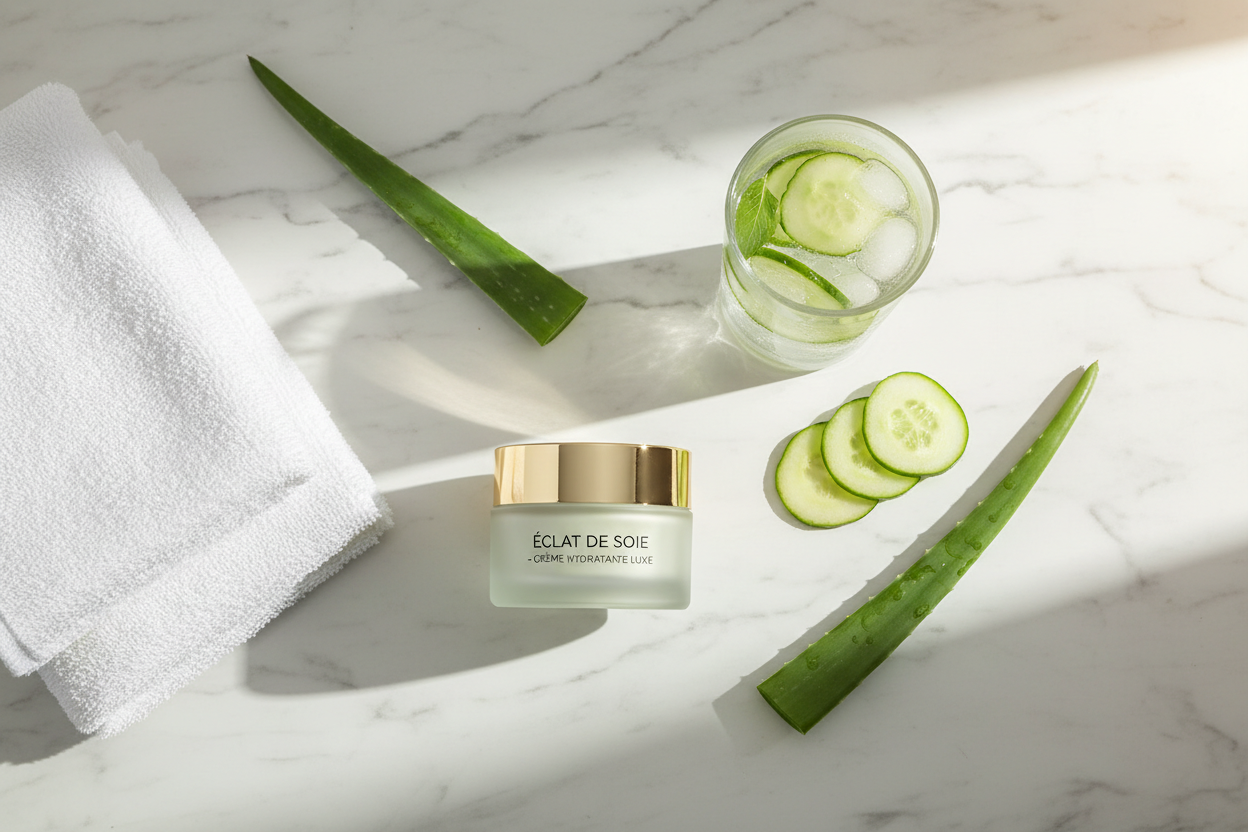
- Aloe Vera: Soothes and hydrates simultaneously, ideal for sensitive or sun-exposed skin.
- Niacinamide: Improves the skin barrier and reduces water loss over time.
Hydration vs. Moisture: What's the Difference?
Hydration refers to the water content within skin cells, while moisture refers to the oil content that prevents water from evaporating. Truly balanced skin needs both. If you're using a great moisturiser but still feel dry, you may need to add a hydrating serum underneath to address the water component.
Simple Habits for Hydrated Skin
- Apply moisturiser within 60 seconds of cleansing while skin is still damp
- Use a hydrating face mist throughout the day
- Sleep with a humidifier in your bedroom during dry months
- Avoid long, hot showers that strip natural oils
- Layer a hydrating serum under your moisturiser for an extra boost
Hydration isn't a luxury — it's a necessity. Make it the non-negotiable foundation of your skincare routine and watch your skin transform.
The journey to hydrated skin doesn't end with your moisturiser. Consistency is key, and small daily habits compound into remarkable results over time. Think of hydration as an investment in your skin's future — every glass of water you drink and every hydrating product
The journey to hydrated skin doesn't end with your moisturiser. Consistency is key, and small daily habits compound into remarkable results over time. Think of hydration as an investment in your skin's future — every glass of water you drink and every hydrating product you apply is a step toward a complexion that radiates health and vitality.
The Role of Professional Treatments
While a solid at-home routine is essential, professional skincare treatments can accelerate your hydration goals. Facials that include hydrating masks, serums, and infusions deliver concentrated doses of moisture directly into the skin. Many dermatologists recommend monthly hydrating facials, especially during winter months or if you live in a particularly dry climate.
Treatments like microdermabrasion followed by hydrating serums can also enhance your skin's ability to absorb moisture by removing dead skin cells that create a barrier to penetration.
Common Hydration Mistakes to Avoid
Even with the best intentions, many people unknowingly sabotage their skin's hydration. Over-cleansing strips away natural oils that help retain moisture — cleanse twice daily at most. Using water that's too hot can also damage the skin barrier, so opt for lukewarm water instead.
Another common mistake is applying moisturiser to completely dry skin. Damp skin allows products to penetrate more effectively and helps lock in hydration. Additionally, using too many active ingredients at once (like retinol, vitamin C, and acids) can irritate and dehydrate your skin, so introduce new products gradually.
Hydration for Different Skin Concerns
If you struggle with acne, dehydration can
Read more

The Secret to Naturally Radiant Skin
There's something undeniably magnetic about naturally glowing skin. It signals health, vitality, and confidence — and the good news is that radiant skin isn't reserved for the genetically blessed. ...
Read more
Morning vs Evening Skincare: The Complete Guide
Your skin has different needs depending on the time of day — and your skincare routine should reflect that. A morning routine is about protection and preparation, while an evening routine is about ...
Read more